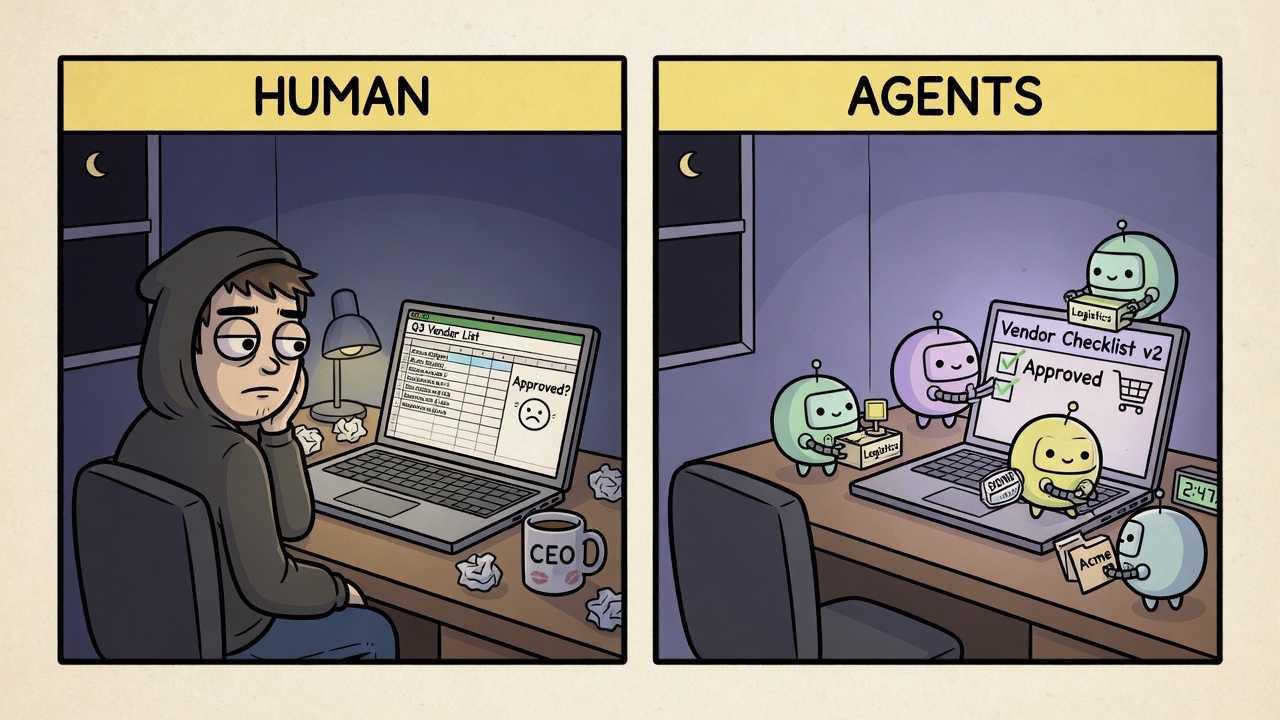
The public record on the agentic economy splits in two. Enterprises are paying for software that acts like an agent. Payment companies are building rails so software can spend. What is still thin, with more than one independent source, is agents as the customer of record for other people's SaaS.
In June 2026, Cloudflare said more than half the HTML requests on its network were already machines — a year earlier than the CEO had forecast. Investor Day materials put daily AI agent requests up about 1,700 percent. A first-quarter earnings remark spoke of hundreds of billions of agentic requests per month. A second-quarter Q&A sketched a directional future in which non-human traffic could be about 1,000 times human traffic if trends hold. Elon Musk later said Cloudflare's forecast is accurate. That is celebrity confirmation of Cloudflare's directional forecast, not an independent measurement. Machine-shaped usage is visible at network scale. Traffic is not checkout.
This investigation grades young, non-vibe agentic startups — about two years old or less when the cited money or usage showed up — and treats older public companies as weather. Inclusion filters (hard): No vibe-coding, and no Replit, Lovable, or Cursor-class app builders. The graded evidence table holds every row, grade, and caveat.
Two businesses, one word
Agents-as-product is a company that sells you an agent. Support. Sales. Security. A person still signs. That money is real. It shows enterprises will pay when a painful job gets finished. It does not show that agents have become a second kind of customer for everyone else's software.
Agents-as-buyer is the other business: software that shops. It finds a tool, calls it, spends. In public, the revenue for that buyer is still thinner than the speeches. Most of what looks like an agent buying is still a human-owned budget operating through software. Stripe's own model still emphasizes human approval per payment. Until agents hold durable spend authority, "agents as buyers" is partly a name for automated procurement.
Who sold agents
The strongest young commercial row is Sierra. In November 2025, TechCrunch wrote that Bret Taylor's customer-service-agent company had reached about $100 million in annual recurring revenue in under two years. The checks were still signed by people. A later hundred million arrived after the young-startup window. The first hundred still counts — as a product sold to humans.
Beside it: Wonderful, founded in 2025, raised $100 million then $150 million against a Reuters company expectation of about $10 million ARR. Artisan (YC W24) reported about $5 million ARR and early churn. Toma reported more than 100 U.S. dealerships, a $17 million a16z round, and company-stated seven-figure ARR. Vambe went from about $20,000 to about $1 million after a WhatsApp-agent pivot. 7AI reported usage — more than 2.5 million alerts and 650,000 investigations — not ARR. Rox is a secondhand $8 million projection. Crescendo talked a $100 million track after acquiring PartnerHero; the combined company then said more than $50 million ARR — hybrid AI plus staffing, not a Sierra-class software ramp. Almost every dollar in this set still comes from a person buying an agent, not an agent buying a tool.
Rails, retail, and the missing ledger
The pipes are further along than the checkout. Sapiom claimed more than 270 million platform transactions after a $50 million total raise, plus a vendor case that cut one inference bill from about $1.2 million to about $100,000 a month. Natural raised $30 million with no volume disclosed. Skyfire launched rails for human-funded agent wallets; no public GMV. Paid raised $21.6 million so agent makers can bill on outcomes. Stripe's Sessions 2026 suite issues human-approved, one-time cards. Chainalysis counted more than 100 million x402 transactions on Base — activity, with farming caveats. Cloudflare Wallets sketch micropay capacity of about 10 million to 100 million financial transactions per second against a Visa peak of about 20,000 — three orders of magnitude bigger than Visa. Rails and ambition are not GMV.
Retail is louder than software checkout. Salesforce said AI and agents drove $67 billion in Cyber Week 2025 sales. Shopify said AI-referred orders grew nearly 13 times year over year. Shoppers, not agents holding a software budget. We do not equate agentic retail GMV with agents purchasing third-party SaaS.
What the large companies show
Salesforce Agentforce ARR ran from about $800 million to about $1.2 billion. ServiceNow said AI crossed $1 billion in annual contract value, with agentic deployments up ninefold in nine months. Stripe said top AI companies on its rails reached $5 million annualized revenue faster than an earlier SaaS cohort. Databricks and Neon report agents creating most databases among measured customers. Weather, not a forecast that a neighbor's API is about to get a machine customer. We do not treat Cloudflare total revenue, Salesforce Agentforce ARR, or ServiceNow AI ACV as agents-as-buyer SaaS GMV.
The base rate for false hope is high. A widely cited MIT NANDA-style finding is that about 95 percent of genAI pilots show little or no measurable P&L impact. Gartner has forecast both widespread agent embedding and that over 40 percent of agentic AI projects will be canceled by the end of 2027. Forecasts are not measurements.
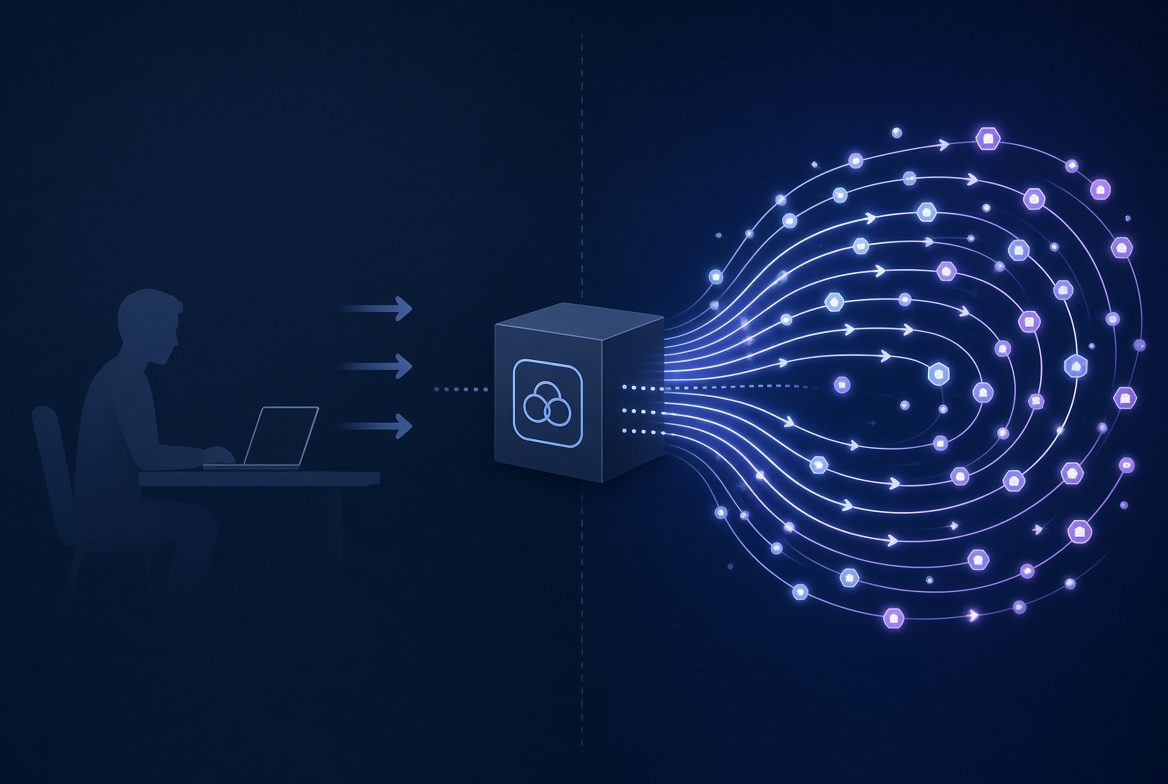
Same product, denser machine demand — a picture of intensity, not of audited agent-originated SaaS revenue.
Holes in the reading
The word "rational" describes objectives someone typed, not a mind. High task frequency can be a free-tier retry storm; vitality without revenue is research. Category winners are not the distribution. A lot of work that still pays needs judgment or a regulated signature. Even fast agent-heavy growth may be cheaper models or capital, not "agents never sleep."
A skeptic can put it this way: enterprises buying agent products, agents hammering infra APIs, payment companies shipping rails, and analysts forecasting both boom and cancellation is consistent with a temporary automation wave inside human firms — not a new permanent buyer species. Until agent-originated, multi-vendor SaaS spend is large, metered, and audited, "agentic economy" is a useful design heuristic, not a settled market structure. That is the default prior. Steel-man of the skeptic: accept it, then measure your own ledger.
What that implies
If the table still interests you, make the product something an agent can finish through an API, an MCP tool, or a skill — even if a human still pays. Measure cost per completed goal. Pick one frequent job with a dollar attached. Most experiments will fail the P&L test. Plan a cheap kill. The working hypothesis, not the verdict: when a product fits an agent's goals at a cost the budget holder can justify, demand can show higher vitality than classic human-first software. Ship that only to the extent your own numbers support it. Founder brand still buys human permission. Mid-loop tool choice is operational reputation. The worksheets live with the scorecard. Argue with a cell in Resources.
Resources
Open the graded evidence table — every row, every grade, every caveat — plus the working sheets for interfaces, questions, metrics, and reputation.